
 EN
EN

Corrosion Resistance of Industrial Steel Construction in Cold-Humid Environments
Low temperature, high humidity, and electrochemical corrosion
In cold-humid environments—especially those with temperatures below 10 °C—aggressive electrochemical corrosion of industrial steel is a serious concern. Accelerated cathodic reactions due to an increase in oxygen solubility in thin moisture films are coupled with a decrease in ionic mobility, which concentrates anodic activity in localized areas and initiates pitting. The synergy of these factors explains why corrosion rates in humid, sub-zero environments can be 1.5–2 times higher than in other climates. Furthermore, it is even worse in the presence of airborne sea salts and deicing chemicals.
Cold-formed versus hot-rolled steel: durability in corrosive coastal-humid zones
Material choice for elements of steel construction determines long-term performance. Cold-formed steel (CFS) is more corrosion resistant to coastal-humid zones because it has a factory-controlled, consistent coverage of zinc. In contrast, the hot-rolled sections have uncontrolled mill scale, which results in inconsistent corrosion protection. Independent salt-spray tests show that the galvanized CFS elements do not form red-rust for 40% longer than the ungalvanized hot-rolled steel. CFS also has a finer grain structure, which facilitates the reduction of micro-cracks, thus reducing corrosion pathways.
ASTM G101 Corrosion Testing of Industrial Steel Construction for the Pacific Northwest and Atlantic Canada
ASTM G101 accelerated corrosion testing has provided evidence of regional change in Austria’s cold and humid zones:
Region Unprotected Carbon Steel (mpy) | Galvanized Steel (mpy)
The increased corrosion rates in Atlantic Canada are a result of increased airborne salinity from persistent ocean spray. These results call for protective systems of at least ISO 12944 C5M for the exposed structural elements and connections. This is the highest corrosion protection for a Marine-Industrial environment.
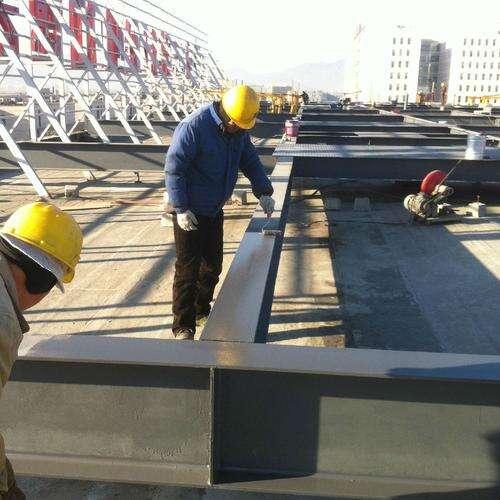
Moisture Management Strategies for Industrial Steel Construction
Dew Point and Condensation Control in Insulated Metal Cladding Systems
In cold and humid industrial steel buildings, accurate dew point analysis is critical to controlling interstitial condensation. When warm, humid air hits cold surfaces, condensation occurs, and wall assemblies begin to corrode. The corrosion is accelerated due to the presence of insulated metal panels. Even a 5ºC error in dew point can lead to 40% more moisture accumulation. Including climate specific thermal modeling in insulation location provides the best approach for condensation control. This is checked with an infrared thermography during the installation. Adding continuous moisture control provides the best approach to controlling corrosion in the building.
Placement of Vapor Barriers and Mechanical Ventilation
The adaption of vapor barriers by builders must match the climate-driven vapor drive. In regions defined as cold and humid, the placement of vapor barriers must be on the interior side of the building assembly. Here the barriers will be warmer than the dew point. They will reduce the inward moisture migration. According to ASTM E96, 0.1 perm vapor barriers, which are properly sealed, reduce the rate of moisture transmission by 97%. This is done most effectively with ASHRAE-compliant mechanical ventilation that provides, at a minimum, 0.3 cfm/sq ft. This ensures that the interior relative humidity is maintained below 45%. This, coupled with proper air sealing at all penetrations and joints, ensures that moisture is not trapped and the integrity of the structural steel is not compromised.
Protective Coating Application and Performance Issues in Cold and Humid Conditions
There are serious concerns for the performance of protective coatings if they are applied at temperatures below 5°C. In these circumstances, coatings have a high risk of failure as they cannot dry to form a protective layer for the metal. Additionally, the high viscosity of protective coatings will prevent the formation of a uniform layer. In construction of industrial steel, this application will fail to protect against corrosion, as condensation will form under the coating. Reactive frosts will form on the surface of the steel, and lead to the formation of blisters under the coating. This causes protection against corrosion to fail. To avoid this, a site must be controlled to provide a heated enclosure at site temperatures of 50°F to 80°F. The humidity needs to be controlled as well as the surface preparation which needs to include the removal of any frost or moisture prior to the application of the coatings.
Adaptations for the Thermal Performance of Industrial Steel Construction Foundations and Frost Heave Mitigation
In cold-humid climates, coastal clay belts make industrial steel structures especially challenging to support upon saturated subsoil foundations. These challenging, saturated, expansive subsoil conditions demand frost heave resistant foundations. Deep foundations penetrate beyond the local frost line, preventing buoyant uplift. Granular drainage layers and a completely wrapped, waterproof, drainage layer membrane footing mitigates hydrostatic pressures due to seasonal fluctuations in groundwater. Site grading to facilitate surface drainage away from the building perimeter decreases subsoil saturation and improves the stability of the footing to the effects of frost heave and freeze-thaw cycles.
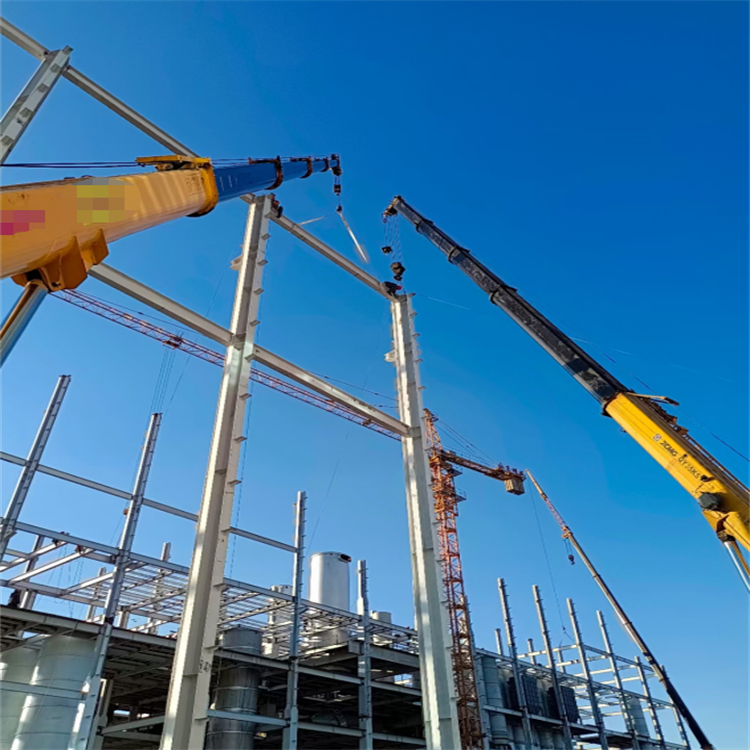
Continuous Insulation and Thermal Bridging Reduction
Thermal bridging through large steel elements is especially detrimental to the thermal performance of buildings in cold-humid climates, resulting in a 30 - 50% increase in heat loss. For steel structures, the use of continuous exterior insulation is critical to the thermal performance of the building and the prevention of corrosion. Structural thermal breaks and compression gaskets of various permeance positioned at critical support and connection points of the building’s exterior, help control the flow of moisture and thermal energy.
FAQ
Why are cold-humid climes especially corrosive to steel?
Cold-humid climates accelerate steel corrosion due to the decreased mobility of ions and increased solubility of oxygen, as well as moisture films which favor corrosion.
What is the benefit of cold-formed steel (CFS) over hot-rolled steel in the conditions given?
Between the factory controlled zinc coating and the refined CFS grain structure providing fewer moisture pathways, cold-formed steel is more resistant to corrosion.
What are the best practices for controlling interstitial condensation in steel construction?
Best practice consists of modeling the dew point, proper placement and selection of vapor barriers and insulation, verification through infrared thermography and, moisture monitoring within the cavity.
What are some of the conditions and drawbacks of protective coatings in cold weather?
When protective coatings are applied under 5°C, challenges such as high viscosity and low adhesion occur due to frost/moisture, increasing blistering and coating failures.
What are some methods used to mitigate frost heave during the winter months?
Frost heave mitigation during the winter months can be accomplished through deep foundation design that extends below the frost line as well as the use of drainage, waterproofing, and proper grading.