
 EN
EN
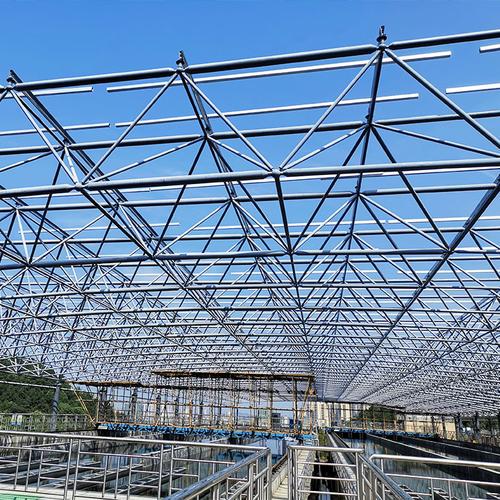
Key Benefits of Prefabricated Steel Construction
Prefabricated steel construction—where structural steel components are engineered, cut, welded, and painted in a controlled factory setting before being shipped to the site for final assembly—has become the standard choice for modern commercial, industrial, and institutional buildings.
Below is an overview of the primary operational, financial, and environmental advantages of utilizing prefabricated structural steel.
1. Accelerated Construction Timelines
The primary advantage of off-site prefabrication is the ability to run parallel workflows:
-
Concurrent Processing: While site excavation, grading, and concrete foundation pouring occur on-site, the structural steel elements are fabricated simultaneously in the factory.
-
Rapid On-Site Erection: Once the foundations cure, pre-engineered steel members arrive on-site ready to be bolted or welded together. This reduces total project schedules by up to 50% compared to traditional cast-in-place concrete methods.
-
All-Weather Assembly: Factory production eliminates weather-related delays (such as rain, freezing temperatures, or high winds) during the critical structural framing phase.
2. Superior Quality Control and Structural Precision
Building in a factory environment delivers consistent, verifiable manufacturing standards that are difficult to achieve in the field:
-
Controlled Environmental Conditions: Factory fabrication avoids moisture, wind-blown dust, and temperature extremes that can compromise weld quality, bolt tensioning, and paint coating adhesion.
-
Advanced Manufacturing Automation: The use of 3D modeling software paired with automated CNC plasma cutters, robotic welders, and precise drilling machinery ensures high dimensional accuracy.
-
Rigorous Non-Destructive Testing: Ultrasonic, magnetic particle, and radiographic weld inspections are conducted in optimal lighting and lab conditions before shipment.
3. Financial Efficiency and Reduced On-Site Overhead
While raw material costs fluctuate, prefabrication provides lower overall project life-cycle costs:
-
Reduced On-Site Labor Costs: Because components are prefabricated for direct assembly, on-site labor requirements can drop by up to 80%. This lowers site accommodation, daily wages, and management overhead.
-
Predictable Material Efficiency: Automated nesting software optimizes steel plate cutting, reducing raw material scrap and eliminating unexpected material waste charges.
-
Earlier Building Occupancy: Shorter construction times allow facilities (such as warehouses, manufacturing plants, or retail centers) to open earlier, accelerating return on investment.
4. Sustainability and Material Recyclability
Structural steel aligns with modern sustainable building frameworks (such as LEED certification):
-
High Recycled Content: Steel is 100% recyclable without any degradation in structural performance. Modern structural steel often contains a high percentage of post-consumer recycled metal.
-
Minimal Construction Waste: Off-site production concentrates steel scrap, allowing 100% of manufacturing off-cuts to be collected and recycled back into the supply chain.
-
Lower Site Carbon Footprint: Shorter on-site construction schedules require fewer heavy machinery running hours, fewer transport deliveries, and less local environmental disruption.
5. Architectural Flexibility and Future Adaptability
Steel's high strength-to-weight ratio offers layout versatility that other construction materials cannot match:
-
Large Clear Spans: Steel space frames and trusses enable vast column-free interior spaces (spanning over 80 meters), which are essential for sports stadiums, aircraft hangars, and logistics hubs.
-
Modular Expandability: Prefabricated steel structures can be designed with pre-drilled connection points, allowing future building extensions or structural additions without major demolition.
-
Custom Geometries: Computer-aided fabrication allows for complex architectural forms, including curved roofs, cantilevered canopies, and irregular building envelopes.
Summary Checklist: Conventional vs. Prefabricated Steel Construction
| Feature | Conventional On-Site Construction | Prefabricated Steel Construction |
| Workflow | Sequential (Foundation → Framing) | Parallel (Simultaneous site work & factory production) |
| Weather Risk | High (Field delays due to weather) | Low (Factory production is fully sheltered) |
| On-Site Labor Needs | High (Large specialized crews) | Low (Small erection & assembly team) |
| Quality Control | Field inspections under variable conditions | Factory quality control & testing under controlled conditions |
| Construction Waste | Moderate to High (On-site cutting) | Near Zero (Precision factory cutting & recycled scrap) |
Table of Contents
- Key Benefits of Prefabricated Steel Construction
- 1. Accelerated Construction Timelines
- 2. Superior Quality Control and Structural Precision
- 3. Financial Efficiency and Reduced On-Site Overhead
- 4. Sustainability and Material Recyclability
- 5. Architectural Flexibility and Future Adaptability
- Summary Checklist: Conventional vs. Prefabricated Steel Construction