
 EN
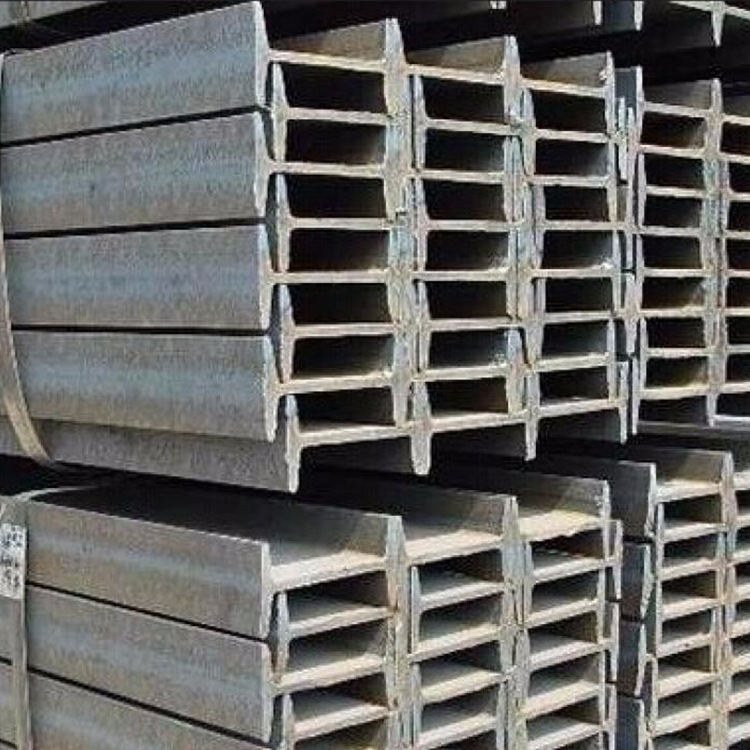
Cost Advantages in Global Steel Construction
Competitive Pricing Benchmarks: $20–$60 per sqm Across Project Tiers
Chinese suppliers consistently offer fabricated structural steel at $20–$60 per square meter—depending on project tier and structural complexity. Basic single-story warehouses and agricultural sheds typically fall near the lower end; multi-story commercial frames, seismic-resistant designs, and heavy-crane industrial facilities approach the upper range. These figures generally include fabricated steel members, connections, and standard protective coatings—but exclude site-specific foundations, civil works, and logistics.
A practical benchmark table helps buyers compare typical project tiers:
| Project Tier | Typical Cost Range (per sqm) | Main Cost Drivers |
|---|---|---|
| Light warehouse / farm shed | $20–$35 | Simple spans, light gauge, standard finishes |
| Mid-range workshop / retail | $35–$50 | Longer clear spans, mezzanines, insulation |
| Heavy industrial / multi-story | $50–$60 | High tonnage, seismic detailing, advanced coatings |
These competitive rates stem from standardized detailing, high-volume production, and low rework rates—not just low labor costs. However, buyers must verify whether quotations include engineering certification, bolt sets, export packing, and corrosion protection. A seemingly low headline price can increase significantly if these items are excluded. For accurate budgeting, always compare full-scope quotations—not raw per-square-meter figures alone.
Key Cost Drivers: Integrated Raw Material Supply and Electric Arc Furnace Efficiency
China’s cost advantage is rooted in two interlocking structural strengths: vertically integrated raw material supply and widespread adoption of electric arc furnace (EAF) technology.
Vertically integrated mills and fabricators—often co-located across eastern provinces—streamline sourcing from iron ore and scrap through melting, rolling, and final fabrication. This minimizes inbound freight, handling delays, and intermediary markups, passing measurable savings to export buyers.
Equally important is EAF efficiency. Compared with traditional blast furnaces, EAFs consume less energy and accept flexible feedstocks—including domestic scrap and direct reduced iron (DRI). As a result, Chinese producers insulate themselves from volatility in imported iron ore prices, stabilizing input costs for structural sections, plates, and welded components. The combined effect allows fabricators to maintain lean margins while delivering export pricing that consistently undercuts regional competitors.
Buyers who understand these drivers gain leverage in negotiations—and avoid overpaying for functionally equivalent steel.
Advanced Fabrication Capabilities for Modern Steel Construction
Automation & Digitalization: Robotic Welding and Digital Twin Adoption
Automation and digitalization are now central to quality, speed, and consistency in export-grade steel fabrication. Leading coastal facilities deploy robotic welding cells for repetitive beam-column joints—reducing weld defects by up to 28% compared with manual processes (2023). Digital twin modeling enables virtual assembly simulation before cutting begins, lowering rework rates by 15–20% on complex frames (2023). When paired with automated material handling and CNC cutting, full-line integration has boosted annual output by as much as 30% in some plants (2024).
This shift reduces reliance on scarce skilled welders and compresses lead times—but requires capital investment and trained personnel. Suppliers that document automation maturity—such as robotic welding penetration rates, digital twin implementation scope, and real-time dimensional QA data—deliver more consistent accuracy across large batches. Buyers evaluating capability should prioritize verifiable evidence over facility age or general claims.
Regional Capacity Gaps: Coastal Precision vs. Inland Scalability
Fabrication capacity in China is regionally differentiated—particularly between coastal and inland hubs—with distinct trade-offs in precision, scale, and cost.
| Capability | Coastal Fabricators | Inland Fabricators |
|---|---|---|
| Dimensional tolerance | ±1 mm | ±3–5 mm |
| Typical automation rate | 60–80% | 20–40% |
| Project fit | Complex export orders | High-volume standard structures |
Coastal clusters—centered around Shanghai, Tianjin, and Shenzhen—have prioritized robotics, digital inspection, and ISO-certified QA systems, making them ideal for tolerance-critical international projects (2024). Inland plants leverage lower land and labor costs to produce high-volume standard sections like H-beams, columns, and trusses efficiently (2023). While some inland fabricators are upgrading lines, certification readiness, logistics connectivity, and technical support still favor coastal hubs for global delivery.
For time-sensitive, specification-driven work, coastal facilities reduce delivery risk. For simpler, volume-based structures, inland partners offer compelling value. Matching project complexity to regional strength—not assuming uniform capability—is essential for optimal sourcing outcomes.
Global Export Infrastructure and Strategic Market Access
Export Scale and Reach: 12.4M MT in 2023 and Belt and Road Integration
In 2023, China exported 12.4 million metric tons of fabricated structural steel—solidifying its position as the world’s largest supplier of engineered steel construction systems. Deep-water ports in Shanghai, Tianjin, and Shenzhen serve as primary gateways, linking inland production clusters to key markets across Asia, the Middle East, Africa, and Europe.
Belt and Road Initiative (BRI) corridors enhance this reach: rail freight links major interior manufacturing zones to coastal terminals, while coordinated maritime schedules reduce transshipment delays. Port automation and containerized shipping protocols further improve handling reliability—even for oversized or pre-assembled steel components. For developers and contractors, this infrastructure translates into predictable lead times, scalable order fulfillment, and lower total landed cost without compromising continuity. It’s not just about volume—it’s about synchronized, project-ready logistics built for global construction demand.
Compliance, Standards, and Sustainability in Chinese Steel Construction
GB/T 50017–2017 Alignment and Dual Carbon Certification for International Projects
International buyers benefit from clear regulatory alignment when Chinese fabricators adhere to GB/T 50017–2017, the national standard for steel structure design. Used alongside widely accepted material grades like Q235 and Q345, it provides a reliable, code-compliant baseline for strength, stability, and weldability—facilitating smoother third-party review and approval in overseas jurisdictions.
Increasingly, sustainability compliance is non-negotiable. Dual carbon certification—covering both product-level carbon footprint (e.g., EPD reporting) and organizational carbon neutrality—is now a practical requirement for many public-sector and ESG-aligned private projects. Reputable manufacturers support this with certified management systems: ISO 9001:2015 for quality assurance and ISO 14001 for environmental performance. Requesting these documents at bid stage mitigates approval bottlenecks and signals that the supplier meets dual expectations—structural integrity and sustainability accountability—across diverse regulatory environments.
FAQs
What is the general price range for fabricated structural steel in China?
Chinese suppliers offer fabricated structural steel for $20–$60 per square meter, depending on project complexity and tier. Simple projects like warehouses cost less, while multi-story or seismic-resistant designs are on the higher end of the scale.
What factors can influence the cost of structural steel projects?
Key factors include project complexity, structural requirements, protective coatings, clear span length, the inclusion of engineering certifications, bolt sets, export packing, and corrosion protection. It’s essential to review full-scope quotations for accurate budgeting.
What gives Chinese steel fabricators their cost advantage?
China’s cost advantage comes from having vertically integrated raw material supply chains, efficient production processes, and widespread adoption of energy-saving electric arc furnaces (EAFs). These systems reduce input and logistics costs while stabilizing prices.
How does automation improve steel fabrication quality?
Advanced automation, such as robotic welding and digital twin modeling, reduces defects, shortens lead times, and enhances consistency across large batch operations. Automation also helps ensure precise fabrication, especially for export-grade steel structures.
What are the differences between coastal and inland steel fabricators in China?
Coastal fabricators prioritize automation, precision, and tolerance-critical projects, such as complex export orders, while inland fabricators offer cost-efficient high-volume production for standard structures, leveraging lower land and labor costs.
Table of Contents
- Cost Advantages in Global Steel Construction
- Advanced Fabrication Capabilities for Modern Steel Construction
- Global Export Infrastructure and Strategic Market Access
- Compliance, Standards, and Sustainability in Chinese Steel Construction
-
FAQs
- What is the general price range for fabricated structural steel in China?
- What factors can influence the cost of structural steel projects?
- What gives Chinese steel fabricators their cost advantage?
- How does automation improve steel fabrication quality?
- What are the differences between coastal and inland steel fabricators in China?