
 EN
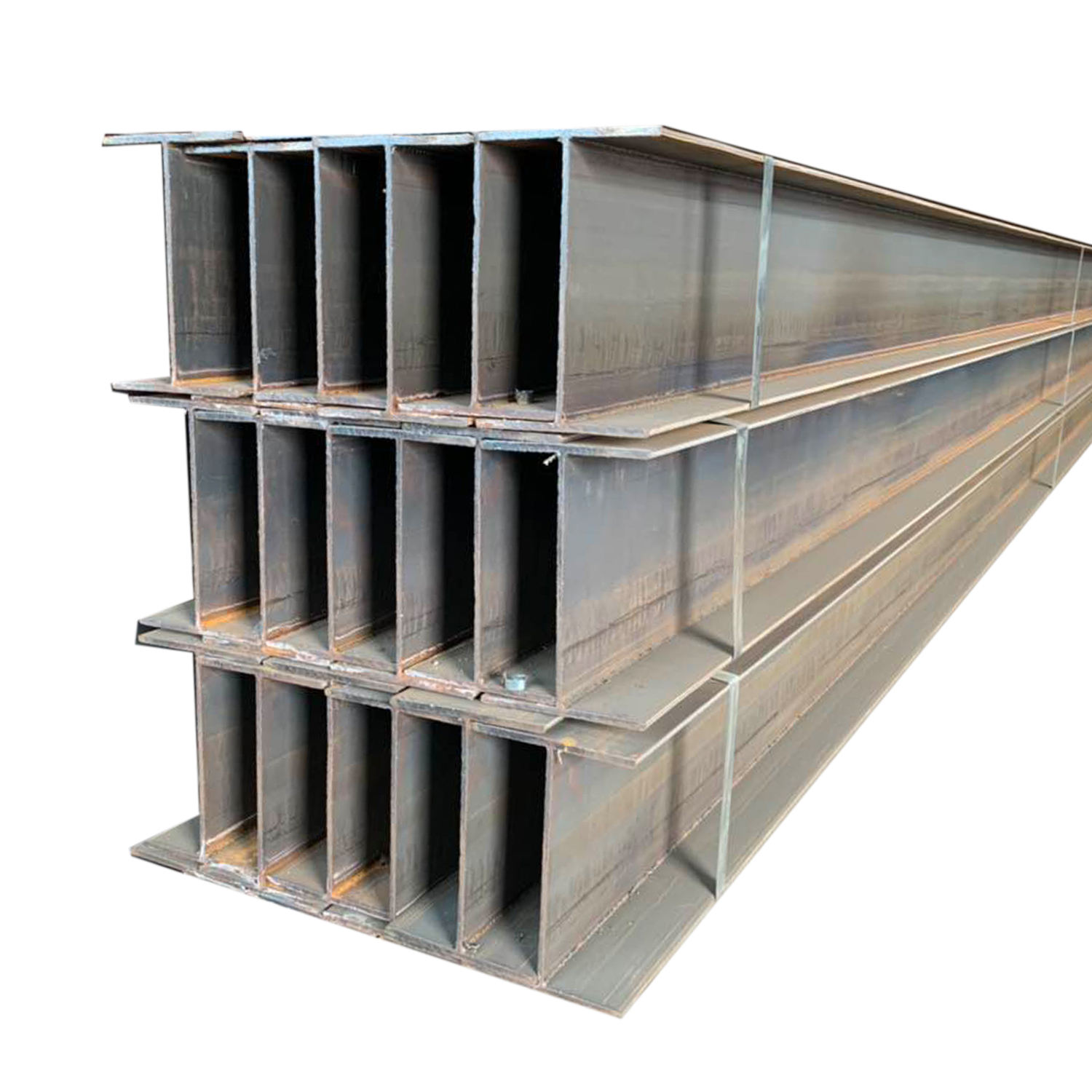
Superior Structural Efficiency for Steel Construction
Isotropic Load Transfer Enabled by Bolted Ball Joints
The bolted ball node redefines force distribution in steel construction by enabling true isotropic load transfer. Unlike conventional joints that impose directional bias, the spherical geometry allows connected members to intersect at a precise mathematical center—eliminating eccentricities common in gusset plate connections and dissolving axial forces, bending moments, and shear into a unified, multi-directional flow. This convergence mobilizes the entire framework holistically under any point load, rather than overloading a linear path of adjacent members. As a result, the space frame behaves as a highly redundant, three-dimensional diaphragm with inherent resilience. For steel construction, this translates directly into structural efficiency: uniform stress distribution permits lighter, more slender hollow structural sections (HSS). Empirical validation in long-span roof applications confirms that failure of a single member does not trigger progressive collapse—loads instantly redistribute through the spherical hub. This behavior makes the system especially well-suited for seismic zones, where ground motion demands a response free of weak-axis orientations.
Stiffness and Deformation Performance: Bolted vs. Welded Space Frames
Bolted ball space frames offer a distinct advantage in stiffness predictability and deformation control compared to welded systems. While fully welded frames achieve theoretical moment continuity, they often introduce residual stresses and heat-affected zones (HAZ) that unpredictably alter yield behavior. In contrast, the bolted system delivers factory-calibrated, semi-rigid connections with uniform partial fixity—yielding more consistent global stiffness and avoiding brittle fracture points common in monolithic welds. Under live loads, engineered micro-rotation at the nodes enables ductile, damped deflection rather than sudden localized buckling. Though instantaneous deflection may be marginally higher, long-term creep is significantly reduced: bolt preload prevents cyclic slack, mitigating fatigue mechanisms inherent in welds. Crucially, energy dissipation occurs through friction at clamped interfaces—a vibration-attenuation mechanism absent in rigid welded joints—preserving geometric integrity across decades of dynamic loading.
Accelerated On-Site Assembly in Steel Construction
Erection Time Reduction: Empirical Data from 12 Global Projects
Analysis of twelve international projects—including airport terminals, sports arenas, and exhibition halls—demonstrates consistent schedule compression with bolted ball space frames. A 2021 benchmarking study by the Steel Construction Institute (SCI) found that a 15,000 m² roof structure was assembled in eight weeks using bolted connections, versus fourteen weeks for an equivalent welded frame—a 43% reduction in on-site labor hours. In a 2020 review of Chinese logistics centers, prefabricated bolted modules lowered crane time by 35%. Across the dataset, median erection time fell by 38%, with some projects achieving up to 50% faster installation. The modular, connection-ready design supports parallel ground assembly of sub-frames, decoupling work from the critical path and reinforcing the bolted system’s role in accelerating modern steel construction.
Precision Prefabrication and Tolerance Control in Bolted Systems
Factory fabrication of bolted ball joints drives rapid, predictable on-site assembly by eliminating field adjustments. Components are machined to ±1.5 mm tolerances per ISO 10721‑1, and off-site trial assemblies verify interface compatibility before delivery—ensuring crews encounter no fit-up surprises. A 2022 European study of long-span domes found this tolerance discipline shortened connection alignment time by 25% on average. Standardized torque values and spherical nodes deliver uniform joint stiffness, enabling teams to erect three to four bay frames per shift—versus one or two with welded systems. The absence of heat-induced distortion and on-site cutting further sustains pace. By embedding precision from the factory floor, bolted systems transform steel construction into a streamlined, high-velocity assembly process with markedly fewer delays.
Optimized Lifecycle Economics for Steel Construction
Lower Maintenance Burden and Corrosion-Resistant Joint Design
Bolted ball space frames significantly reduce long-term maintenance demands in steel construction. Unlike welded structures—where continuous heat-affected zones create moisture traps and corrosion pathways—the discrete node-and-member design isolates potential vulnerabilities. Precision-engineered components arrive on-site with protective hot-dip galvanizing or specialized metal coatings already applied, avoiding the grinding, welding, and repainting required for field joints—steps that leave exposed steel vulnerable to premature rust. Financially, while traditional building assets often incur annual upkeep budgets of 2–4% of initial capital, well-designed bolted steel structures typically require less than 1% per year. This durable, low-maintenance profile is not just a performance benefit—it’s a quantifiable operational cost advantage that enhances net asset value over a 40- to 50-year service life.
Design for Disassembly and Material Reusability
The bolted connection’s inherent reversibility unlocks a powerful end-of-life economic benefit: non-destructive deconstruction and high-value material recovery. Aligned with ASTM E2921-22 standards for whole-building life cycle assessment, these systems can be unbolted without damage, enabling near-complete reuse of primary structural members in future projects—or, at minimum, efficient recycling without energy-intensive separation from concrete, as required in composite systems. By converting demolition from a disposal liability into a recoverable material bank, this approach eliminates waste and transforms a structure’s final phase into a financial credit—reinforcing the lifecycle economics of modern steel construction.
FAQ
What makes bolted ball joints superior in steel construction?
Bolted ball joints enable isotropic load transfer, eliminating eccentricities and distributing stress uniformly. This improves structural efficiency and resilience, especially for seismic zones.
How do bolted space frames compare to welded ones in performance?
Bolted systems ensure better stiffness predictability, avoid residual stresses, and dissipate energy via friction, making them more durable and reliable over time. Welded frames, on the other hand, can introduce brittle fracture points and unpredictable yield behaviors.
Why does using bolted systems reduce erection time?
Bolted systems support prefabrication and parallel assembly, reducing crane hours and avoiding on-site adjustments, which accelerates installation significantly compared to traditional welded frames.
How do bolted designs minimize maintenance and corrosion?
Bolted connections isolate potential vulnerabilities and arrive with protective coatings, avoiding moisture traps. This lowers annual maintenance costs compared to welded structures.
Can bolted structures be disassembled and reused?
Yes, bolted connections allow reversible assembly, enabling efficient reuse of structural members or recycling without damage or extensive labor.