
 EN
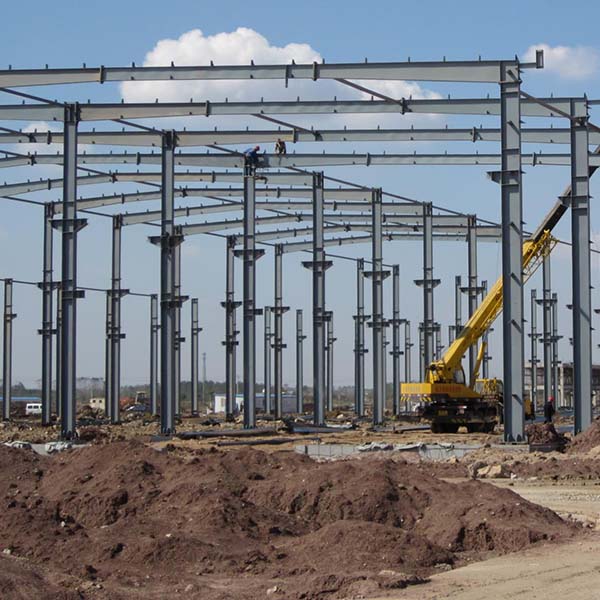
Key Differences in Steel Structure Fabrication Standards: EN vs. AISC
Design Philosophy Gap: Eurocode 3 Limit-State Design vs. AISC Allowable Stress and LRFD Methods
The core divergence in steel structure fabrication begins with how safety is codified in design. Eurocode 3 (EN 1993) adopts a rigorous limit-state approach, applying distinct partial safety factors to both loads and material resistance—such as γM0 = 1.0 for cross-section resistance and γM2 = 1.25 for fracture resistance. In contrast, AISC 360 offers two methodologies: the legacy Allowable Strength Design (ASD), which applies a single global safety factor, and Load and Resistance Factor Design (LRFD), which uses calibrated resistance factors (e.g., φ = 0.9 for bending in hot-rolled shapes). While nominal section capacities for S355 (EN) and ASTM A992 (AISC) are functionally equivalent, differing load combinations and safety factor allocations can shift utilisation ratios by 3–5%. For fabrication teams, this means divergent justification packages—impacting connection detailing, inspection scope, and project-specific quality plans depending on whether CE marking or AISC certification governs the work.
Material Specification Conflicts: S355 vs. ASTM A992, Yield Strength Tolerances, and Mill Test Reporting
Material traceability is non-negotiable in dual-market steel structure fabrication. S355 (EN 10025-2), the dominant European structural grade, guarantees a minimum yield strength of 355 MPa for thicknesses ≤16 mm and enforces tight carbon-equivalent limits to ensure weldability. ASTM A992—the U.S. counterpart—specifies a minimum yield of 345 MPa but permits an upper bound of 448 MPa, effectively overlapping with S355 in practice. Critical differences emerge in mill test reporting (MTR): EN 10204 Type 3.1 certificates require full chemical analysis tied to each heat and delivery lot, while ASTM A6/A6M permits summary reports that may omit melt-level traceability. EN 1090-2 further mandates yield strength verification under its Execution Classes—EXC2 requires batch sampling to demonstrate standard deviation <15 MPa for S355—a level of statistical control absent from AISC 360, which delegates material conformity to the fabricator’s internal quality management system. Dual-market facilities must therefore maintain segregated material quarantine, testing, and documentation workflows to prevent non-conformance.
Fabrication Tolerance Requirements: EN 1090-2 Execution Classes vs. AISC 360/303 Dimensional Allowances
Tolerance requirements directly shape shop-floor execution. EN 1090-2 defines four escalating Execution Classes (EXC1–EXC4), with EXC2 requiring column straightness within L/1000 (≤10 mm) and splice face preparation tolerance of ±1 mm. EXC3 tightens these to L/1500 (≤6 mm) and ±0.5 mm—levels that exceed even AISC’s most stringent criteria. By comparison, AISC 303 permits column sweep up to L/1000 capped at 12 mm for lengths ≤14 m, and accepts field splice contact verified by a 1.5 mm feeler gauge. These discrepancies necessitate separate jig calibration, survey protocols, and dimensional verification routines—unless deliberately harmonised. Fabricators achieving dual compliance often adopt EXC3 as the governing baseline; while this increases direct labour hours by 8–12% versus single-standard production, it eliminates rework and enables seamless validation against both frameworks.
Compliance Pathways for Steel Structure Fabrication in Dual Markets
EN 1090-1 Certification: CE Marking, Factory Production Control (FPC), and Declaration of Performance (DoP)
EN 1090-1 is the mandatory regulatory gateway for steel structure fabrication destined for the European market. It requires manufacturers to implement a documented Factory Production Control (FPC) system covering every stage—from raw material receipt and welding procedure qualification to final dimensional inspection and traceability. An independent notified body audits the FPC and verifies consistency with the declared Execution Class. Upon successful assessment, the fabricator issues a legally binding Declaration of Performance (DoP), affirming compliance with essential characteristics including load-bearing capacity, fire reaction, and durability—and affixes the CE marking. This transforms fabrication from a craft-based process into a regulated conformity activity, providing developers with auditable evidence to place structures on the EU market without national retesting.
AISC Certification Program: Structural Steel Fabricator (SSF) Accreditation and AWS D1.1 Integration
In North America, competence is demonstrated through the AISC Certification Program’s Structural Steel Fabricator (SSF) accreditation. This audit evaluates the entire production system against the AISC Quality Management System, which fully integrates the American Welding Society’s AWS D1.1 Structural Welding Code. Assessors validate personnel qualifications, welding procedure specifications (WPS), material handling controls, NDT protocols, and coating application—ensuring alignment with both AISC 360 and AWS D1.1. Unlike EN 1090-1’s product-focused DoP, AISC SSF accreditation certifies systemic capability across engineering, fabrication, and erection. For dual-market operations, combining EN 1090-1 FPC with AISC SSF accreditation creates a robust, unified quality framework—enabling consistent documentation, shared training, and interoperable inspection records that satisfy both regulatory regimes.
Practical Feasibility of Dual-Standard Steel Structure Fabrication
Case Study: Rotterdam Logistics Hub — Simultaneous EN 1090‑2 EXC3 and AISC 360‑22 Compliance in One Fabrication Workflow
The Rotterdam Logistics Hub—a 25,000 m² distribution centre backed by European and North American investors—required full compliance with both EN 1090‑2 EXC3 and AISC 360‑22. The steel structure fabrication contractor implemented a converged quality system integrating EN 1090‑1 Factory Production Control with AISC Workshop Certification. S355J2 steel was sourced with EN 10204 Type 3.2 certificates and supplemented with ASTM A992-grade yield strength verification. Welding procedures were qualified to both AWS D1.1 and ISO 5817‑B, with ultrasonic testing mandated for full-penetration joints and magnetic particle inspection for fillet welds per AISC requirements. Dimensional verification deployed laser tracking for EXC3-level geometric tolerances while retaining conventional survey methods for AISC 303 validation. Embedding both standards into a digital-twin workflow enabled real-time tolerance monitoring and automated compliance reporting—reducing rework by 35% and cutting inspection lead time by 20%. The project confirms that dual-standard steel structure fabrication is not only feasible but operationally advantageous when grounded in integrated systems—not parallel silos.
Frequently Asked Questions (FAQs)
What is the main difference between EN and AISC standards in steel structure fabrication?
The primary difference lies in the design philosophy: EN uses a limit-state design approach with partial safety factors, whereas AISC employs either Allowable Strength Design (ASD) or Load and Resistance Factor Design (LRFD) with global safety factors or calibrated resistance factors.
How do material specifications differ between S355 and ASTM A992 grades?
S355 guarantees a minimum yield strength of 355 MPa for certain thicknesses, while ASTM A992 specifies a lower minimum yield of 345 MPa but allows for a higher maximum of 448 MPa. Certification requirements and traceability practices also differ significantly between the two standards.
What are the key differences in fabrication tolerances between EN 1090-2 and AISC standards?
EN 1090-2 Execution Classes (EXC) impose stricter tolerances compared to AISC standards, particularly at higher execution levels like EXC3. This includes tighter tolerances for column straightness and splice face preparation.
What is the importance of EN 1090-1 certification for steel structure fabrication?
EN 1090-1 is required for steel structures entering the European market. It involves implementing a Factory Production Control (FPC) system and providing legally binding Declarations of Performance (DoP) to ensure compliance with EU construction regulations.
Is dual-standard compliance feasible in steel structure fabrication?
Yes, dual-standard compliance is feasible and often beneficial. It requires an integrated quality management system that aligns with both EN and AISC standards to ensure efficiency and minimize rework.
Table of Contents
-
Key Differences in Steel Structure Fabrication Standards: EN vs. AISC
- Design Philosophy Gap: Eurocode 3 Limit-State Design vs. AISC Allowable Stress and LRFD Methods
- Material Specification Conflicts: S355 vs. ASTM A992, Yield Strength Tolerances, and Mill Test Reporting
- Fabrication Tolerance Requirements: EN 1090-2 Execution Classes vs. AISC 360/303 Dimensional Allowances
- Compliance Pathways for Steel Structure Fabrication in Dual Markets
- Practical Feasibility of Dual-Standard Steel Structure Fabrication
-
Frequently Asked Questions (FAQs)
- What is the main difference between EN and AISC standards in steel structure fabrication?
- How do material specifications differ between S355 and ASTM A992 grades?
- What are the key differences in fabrication tolerances between EN 1090-2 and AISC standards?
- What is the importance of EN 1090-1 certification for steel structure fabrication?
- Is dual-standard compliance feasible in steel structure fabrication?