
 EN
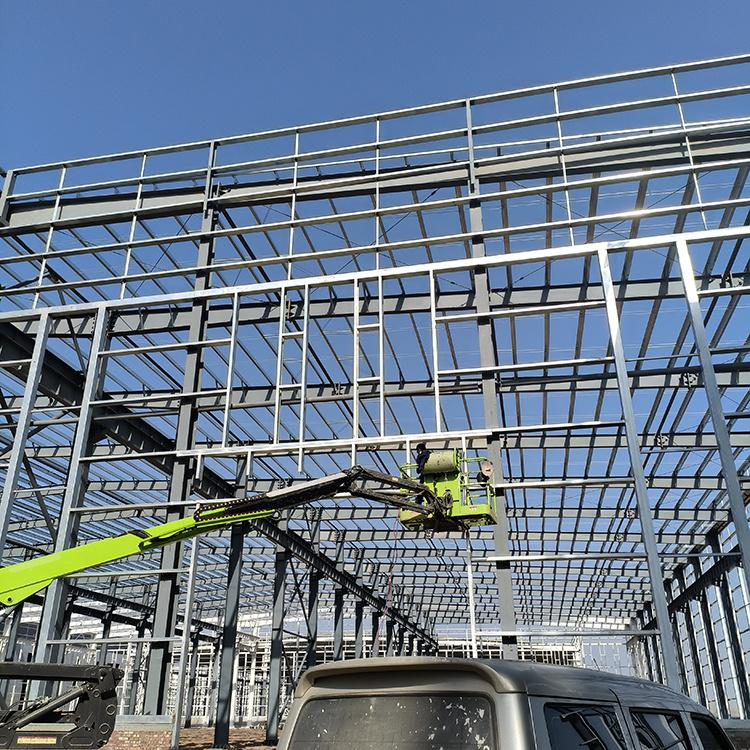
Physical Geometry and Manufacturing: How Steel Beam Profiles Are Defined
Flange Width, Web Thickness, and Symmetry: The Core Structural Distinction
The primary geometric distinction between an I‑beam and an H‑beam lies in flange width, web thickness, and cross‑sectional symmetry. A standard I‑beam (also designated as an S‑shape or American Standard beam) features flanges that taper inward, with inner faces sloping at a slight angle—reducing lateral torsional buckling resistance compared to wide‑flange shapes, per AISC 360‑22. In contrast, an H‑beam—typically a W‑shape wide‑flange steel beam—has parallel flange faces and a flange width approximately equal to its depth, forming a compact, doubly symmetric section. Its thicker web enhances shear capacity and axial load performance, while the wider flanges shift the centroid farther from the web, increasing section modulus and lateral stiffness. This makes H‑beams ideal for columns and long‑span girders. I‑beams, by concentrating material near the top and bottom extremes of the section, optimize efficiency for unidirectional bending—making them well suited for residential and light commercial floor joists where lateral stability is less critical.
Rolled vs. Welded Fabrication: Origins of the H‑Beam and Modern Steel Beam Variants
The H‑beam emerged from the need for heavier, more robust sections beyond the limits of early hot‑rolling technology. Traditional I‑beams were produced entirely via hot rolling—passing heated billets through grooved rolls—which inherently constrained flange width and parallelism. The development of universal rolling mills enabled efficient production of wide‑flange H‑beams, many of which continue to be manufactured per ASTM A6/A6M (2023). For very large or custom dimensions—where mill capabilities are exceeded—welded fabrication is standard: a flat web plate is joined to two flange plates using full‑penetration fillet welds to form a built‑up H shape. This method allows precise control over flange width, web thickness, and steel grade, often reducing material use by up to 15% compared to oversizing a rolled section (SSFI 2023). While rolled H‑beams remain cost‑effective for standardized sizes, welded variants dominate long‑span bridges and high‑rise columns—where tailored geometry minimizes steel tonnage without compromising structural integrity.
Load-Bearing Performance: Strength, Stiffness, and Stability of Steel Beams
Moment of Inertia and Section Modulus: Why Geometry Dictates Bending Efficiency
A steel beam’s bending efficiency depends directly on its moment of inertia (I) and section modulus (S)—both derived from cross‑sectional geometry. Deeper profiles with mass concentrated in the flanges resist bending more effectively because tensile and compressive stresses peak at the flange extremities. H‑beams, with their wide, parallel flanges and uniform thickness, achieve significantly higher I and S values than comparably weighted I‑beams. Since section modulus increases with the square of the depth, even modest dimensional improvements yield substantial gains: switching from a tapered‑flange I‑beam to a wide‑flange H‑beam can boost bending resistance by 30–50% without added weight. This geometric advantage translates into longer feasible spans and reduced service‑load deflection—key considerations in modern structural design.
Buckling Resistance and Axial Load Capacity in High-Rise and Long-Span Steel Beam Applications
Lateral‑torsional buckling is a dominant failure mode in unrestrained beams under bending or combined axial and flexural loading. The wide, parallel flanges of an H‑beam provide superior torsional rigidity, raising the critical buckling moment well above that of a typical I‑beam. In high‑rise structures—where columns and beam‑columns must carry significant axial loads while resisting wind and seismic moments—this enhanced stability is essential. H‑beams’ compact proportions also keep flange width‑to‑thickness ratios within AISC-specified limits, delaying local buckling. For long‑span applications such as bridges or transfer girders, greater buckling resistance reduces reliance on intermediate bracing, cutting both material and labor costs. As a result, H‑beams are the preferred solution when axial capacity and lateral stability govern structural performance—ensuring reliability across demanding, large‑scale projects.
Steel Beam Selection Criteria: Matching H-Beam and I-Beam to Project Requirements
Span Length, Load Type, Connection Demands, and Cost-Efficiency Tradeoffs
Selecting the right steel beam requires evaluating span length, load type, connection complexity, and budget constraints. H‑beams support spans up to 330 feet; I‑beams are typically optimal for 33–100 foot ranges. Load patterns further differentiate their roles: H‑beams excel under heavy, multi‑directional forces—including combined axial, bending, and torsional actions—while I‑beams perform efficiently under simpler dead and live load conditions. Connection simplicity also favors H‑beams: their parallel, wide flanges accommodate standard bolted connections with minimal field modification. In contrast, I‑beams’ tapered flanges often require additional shop fabrication for secure, code‑compliant joints. Cost‑wise, I‑beams offer lower material and processing expenses for standard applications—but H‑beams deliver superior stiffness, stability, and long‑term value in high‑rise frames and open‑plan commercial spaces where performance justifies the initial investment.
Frequently Asked Questions
What is the main difference between an I-beam and an H-beam?
The primary distinction lies in their geometry: H-beams have wider flanges with parallel faces, while I-beams feature tapered flanges. H-beams provide greater stiffness and stability whereas I-beams are more lightweight and suited for residential applications.
When should H-beams be used instead of I-beams?
H-beams are ideal for high-rise structures, bridges, and long-span girders where axial load capacity, buckling resistance, and stability are critical. I-beams are best for lighter loads and shorter spans in residential or light commercial infrastructure.
How are welded H-beams different from rolled variants?
Welded H-beams allow for custom dimensions and optimized material use, while rolled H-beams are pre-manufactured and more cost-effective for standard sizes.
What factors influence steel beam selection?
Key factors include span length, load type, connection needs, and cost efficiency. Performance metrics like moments of inertia and section modulus also play a crucial role.