
 EN
Cost Efficiency and Predictable Project Delivery
Reduced labor costs and accelerated on-site assembly
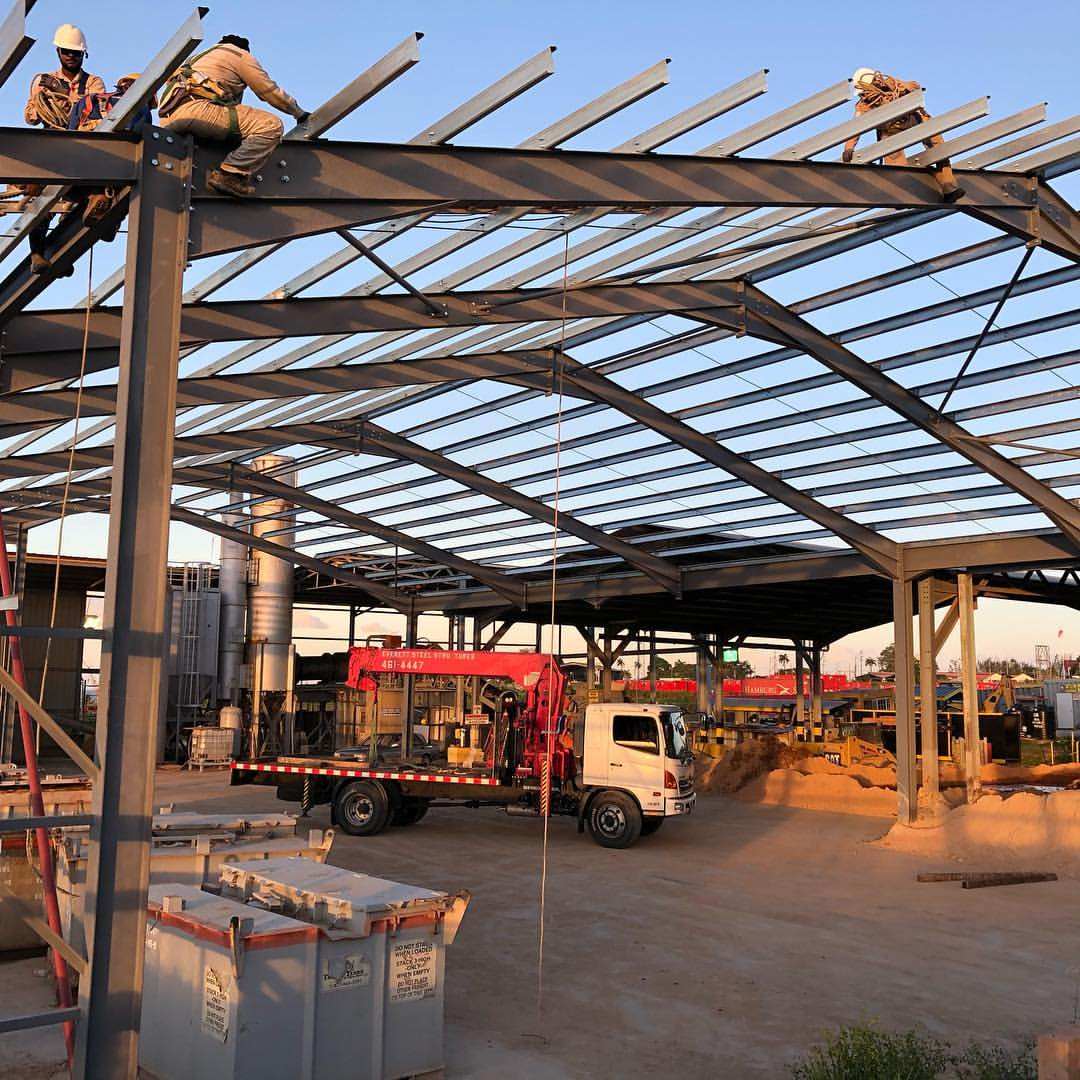
Prefabricated components drastically reduce on-site tasks: workers bolt together pre-engineered frames instead of cutting, welding, or building formwork. A 2023 study by an independent construction think tank found this systemized approach can cut required on-site labor hours by up to 30%. Speed gains are equally significant—a typical steel frame erects in days, not weeks.
| Activity | Traditional In-Situ | Prefabricated Steel |
|---|---|---|
| On-site labor input | 8–12 workers, 3–4 weeks | 4–6 workers, 5–7 days |
| Weather-related delays | Frequent | Minimal (enclosed factory work) |
| On-site adjustments | High (cutting/welding) | Near-zero (pre-drilled, precision connections) |
Shifting labor to the factory floor enables predictable scheduling—eliminating costly overtime, weather-driven rework, and crew inefficiencies. The straightforward assembly sequence allows even smaller teams to sustain rapid progress. Shorter timelines mean earlier cash flow for builders and fewer surprise change orders for owners. This labor-driven reliability transforms steel frame delivery from a variable endeavor into a tightly managed process.
Minimized material waste and streamlined procurement for steel frame building projects
Factory production uses computer-controlled cutting to limit off-cuts to under 2% of total material—far below the 15–20% waste typical in concrete or timber framing (Construction Materials Recycling Association, 2022). Every beam and column arrives labeled and ready to install, virtually eliminating on-site scrap, disposal fees, and cleanup time.
Procurement becomes lean and transparent through single-source pre-engineered kits. Project managers order exactly what’s needed—and only when it’s needed—removing the need for over-ordering “just in case.” A 2024 logistics report from a building-materials trade group confirms that just-in-time delivery of steel framing reduces material holding costs by an average of 25%. Finance teams benefit from one fixed-price package, zero waste-tipping fees, and no last-minute express shipments—keeping projects firmly on budget and on schedule.
Superior Durability and Resilience of Steel Frame Buildings
Long-term structural integrity with advanced corrosion protection
Steel frame buildings are engineered for exceptional longevity—often exceeding traditional materials by decades. Modern hot-dip galvanizing applies a zinc coating that acts as both a physical barrier and sacrificial anode, protecting steel from moisture and oxygen. Field studies document zinc loss rates as low as 0.12–0.24 g/m²/year under normal conditions, enabling protected components to achieve a design life of 250 years (Steel Construction Institute, 2024)—far surpassing wood’s typical 30–50 year service life. Factory-applied epoxy primers or powder coatings further boost resistance in aggressive environments like coastal or industrial zones. Because steel is inorganic, it resists warping, cracking, rot, termites, and fungal decay—maintaining dimensional stability and strength with minimal maintenance and avoiding the costly repairs common with organic materials.
Proven performance in high-wind, snow-load, and seismic environments
Steel’s high strength-to-weight ratio makes it uniquely suited to withstand extreme natural forces. In hurricane-prone areas, properly engineered steel frames reliably resist wind speeds exceeding 150 mph (67 m/s). Its ductility allows controlled deformation during seismic events, absorbing and dissipating energy to prevent brittle collapse. Comparative analysis shows steel-framed structures suffer significantly less damage under heavy snow loads, as their predictable load capacity avoids sudden buckling. Structural testing confirms steel moment frames endure cyclic loading that would splinter wood or crack unreinforced concrete—delivering occupant safety where it matters most. This proven resilience often translates to lower insurance premiums and greater confidence for owners in disaster-prone regions.
Enhanced Safety and Sustainable Advantages
Inherent non-combustibility and high fire-resistance ratings
Steel is inherently non-combustible—it does not ignite, burn, or contribute fuel to a fire. Unlike wood, it eliminates a primary vector for flame spread. When tested to ASTM E119, unprotected steel maintains structural integrity for extended durations; with intumescent coatings or gypsum sheathing, fire-resistance ratings of 2 hours or more are standard. A 2021 report from the National Institute of Standards and Technology found non-combustible construction reduced flame spread by 60% in compartment fire tests. This performance protects lives and limits property damage—factors insurers recognize in lower premiums. By specifying code-compliant fireproofing layers, project teams consistently meet—and frequently exceed—life safety requirements without relying on chemical treatments that degrade over time.
End-of-life recyclability and lower embodied carbon vs. concrete alternatives
Steel frame buildings embody sustainability through a true cradle-to-cradle lifecycle. Steel is 100% recyclable, with real-world data from the World Steel Association (2023) showing a global recycling rate of about 85% for structural steel—diverting material from landfills and reducing demand for virgin ore. Concrete, by contrast, typically enters a downcycling loop, becoming lower-value aggregate. Embodied carbon comparisons reinforce the advantage: hot-rolled structural steel carries roughly 0.5–0.8 tCO₂e per tonne, while equivalent concrete members often exceed 0.9 tCO₂e/tonne (One Click LCA, 2022). Further, electric-arc furnace production—which now accounts for 70% of U.S. steel output—reduces primary energy demand by 60–70% compared to basic oxygen steelmaking. These attributes position steel frame construction as a strategic choice for LEED v4.1 or BREEAM-certified projects, aligning cost efficiency with measurable environmental stewardship.
FAQs
What is the main advantage of prefabricated steel components in construction?
Prefabricated steel components drastically reduce labor hours and on-site assembly time, while minimizing weather-related delays and material waste, leading to efficient and predictable project delivery.
How durable are steel frame buildings?
Steel frame buildings are highly durable. With advanced corrosion protection like hot-dip galvanizing, they can achieve a design life of up to 250 years, far surpassing traditional materials like wood.
Are steel frame buildings eco-friendly?
Yes, steel is 100% recyclable and has lower embodied carbon compared to concrete alternatives. This makes steel frame construction a sustainable choice for modern projects.
Do steel frame buildings offer better safety during natural disasters?
Steel's strength and ductility make it highly resilient in high-wind, snow-load, and seismic environments, reducing structural damage and enhancing occupant safety.
How fire-resistant are steel frame buildings?
Steel is non-combustible and, when paired with intumescent coatings, can achieve fire-resistance ratings of 2 hours or more, offering superior protection against flame spread and structural collapse.