
 EN
EN
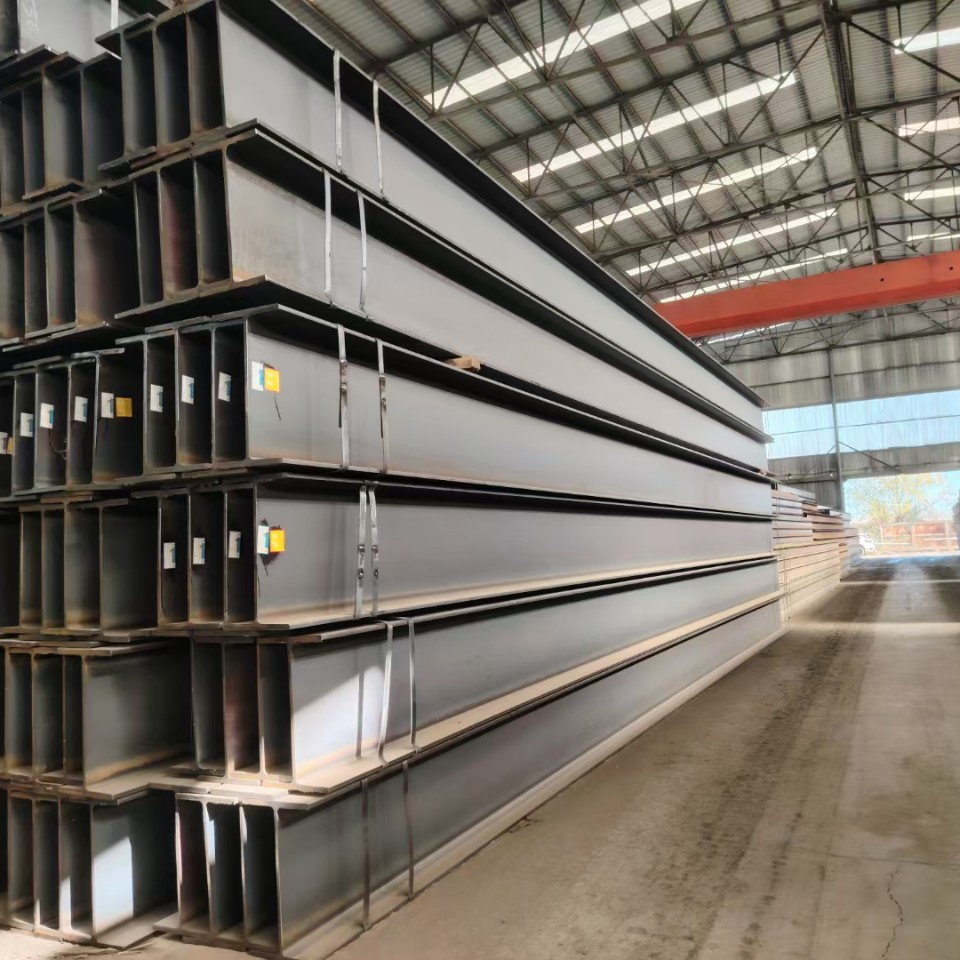
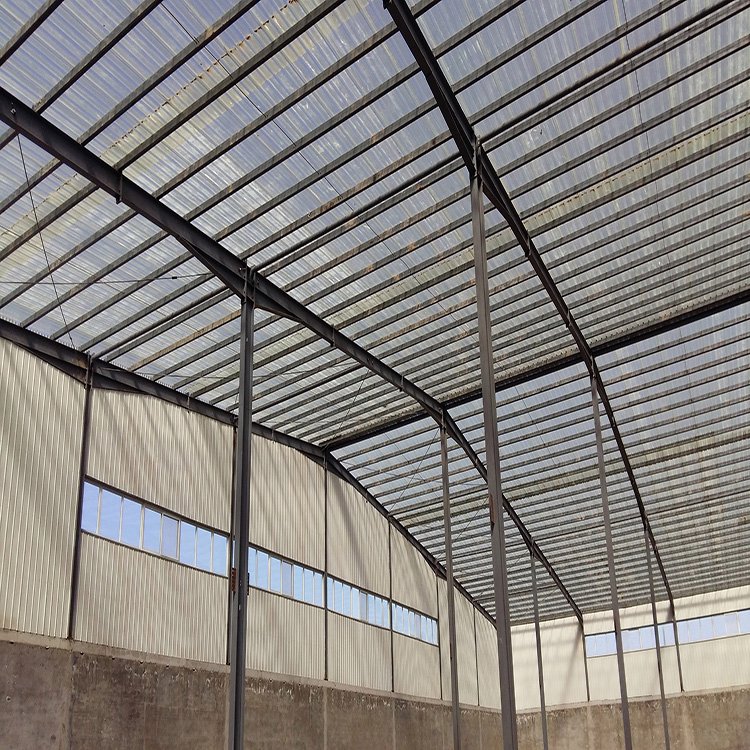
A coastal port authority in West Africa commissioned covered storage for bulk minerals, specifying long-span steel trusses spanning 60 meters. Within eighteen months, surface rust appeared at truss node connections despite a standard primer-and-topcoat system. Investigation revealed chloride deposition from sea spray had penetrated micro-cracks in the coating at bolted joints — a failure mode the original specification never anticipated. The trusses required full abrasive blasting and recoating with an epoxy zinc-rich system, costing 40% of the original fabrication value.
Steel truss corrosion is never just a surface problem. At bolted and welded nodes — where stresses concentrate and geometry creates crevices — corrosion reduces cross-sectional area progressively, compromising load capacity long before visible rust becomes obvious.
Understanding the Corrosion Environment
How Environmental Categories Determine Treatment Requirements
ISO 12944 classifies atmospheric environments into six corrosivity categories, from C1 (very low — heated buildings with clean air) to CX (extreme — offshore structures with continuous salt spray). A steel truss inside a climate-controlled warehouse faces C1 or C2 conditions. The same truss in an unheated coastal warehouse with open ventilation faces C4 or C5 conditions requiring fundamentally different protection strategies.
The classification matters because it dictates coating thickness, the number of coats, and specific paint chemistry. A coating system adequate for C2 — perhaps 160 microns of alkyd primer and topcoat — fails rapidly in C4 conditions where 280 microns of epoxy and polyurethane are the minimum. Selecting treatment without knowing the ISO category is the single most common specification error in steel truss projects.
Corrosion Mechanisms Specific to Truss Geometry
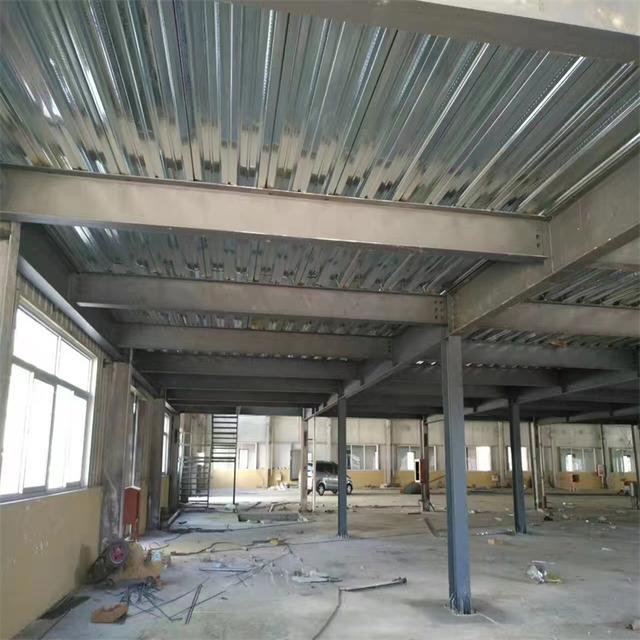
Truss members intersect at nodes where bolted gusset plates or welded connections create crevices, overlapping surfaces, and sharp geometric transitions. Moisture trapped in a bolted joint evaporates more slowly than on open surfaces, extending the time that steel remains wet — and corrosion rate is directly proportional to time-of-wetness. Drainage holes in hollow structural sections prevent internal condensation accumulation, a detail frequently overlooked in truss fabrication drawings.
Hot-Dip Galvanizing — The Industry Benchmark
How the Galvanizing Process Protects Steel
Hot-dip galvanizing immerses fabricated steel truss components in molten zinc at approximately 450°C, producing a metallurgically bonded coating that averages 85–200 microns depending on steel thickness. Three distinct iron-zinc alloy layers form between the steel substrate and the outer pure zinc layer, each harder than the base steel itself — the innermost delta layer reaches approximately 250 DPN hardness versus 159 DPN for mild steel.
The protection mechanism operates on two levels. The barrier function physically isolates steel from moisture and oxygen. The cathodic (sacrificial) function means zinc corrodes preferentially to steel at any coating breach — scratches up to approximately 6 millimeters wide self-heal through zinc corrosion products that migrate across the exposed steel surface. No organic paint system offers this sacrificial protection.
ASTM A123 specifies minimum coating thickness for structural steel based on material thickness. A 10-millimeter-thick truss member requires a minimum average coating of 85 microns, while thinner sections require proportionally less.
Practical Constraints of Galvanizing for Trusses
Galvanizing baths have physical size limits. Truss assemblies exceeding 15 meters in length typically require modular design with field-bolted connections, as they cannot fit into standard galvanizing kettles. Vent and drain holes must be designed into hollow sections to prevent explosion risks from trapped air expansion and to allow molten zinc to flow freely through internal cavities. These requirements affect truss detailing at the engineering stage — retrofitting vent holes after fabrication is expensive.
Coating Systems for Severe Environments
Epoxy Zinc-Rich Primer Systems
For steel trusses too large for galvanizing or requiring on-site touch-up after bolted assembly, epoxy zinc-rich primers containing 80–90% metallic zinc by weight in the dry film provide the closest organic equivalent to galvanizing. Applied at 60–80 microns over abrasive blast-cleaned steel (SA 2½ per ISO 8501-1), zinc-rich primers offer cathodic protection similar to galvanizing.
A complete system for C4 environments typically layers epoxy zinc-rich primer (60–80 microns), high-build epoxy micaceous iron oxide intermediate coat (100–150 microns), and an aliphatic polyurethane topcoat (50–80 microns). The intermediate coat provides barrier thickness and lamellar pigment orientation that extends the moisture diffusion path. The topcoat delivers UV resistance — epoxy alone chalks and degrades under sunlight within months.
Inspection, Selection, and Ongoing Maintenance
Procurement Specification Checklist
An anti-corrosion specification for steel trusses must state the ISO 12944 corrosivity category, required durability range, surface preparation standard, coating system by generic type and minimum dry film thickness per coat, and inspection hold points. A specification that says "paint with anti-rust primer" provides no enforceable quality standard.
The inspection process requires certification of blast-cleaning profile, ambient condition monitoring (steel temperature at least 3°C above dew point), wet film thickness checks during spraying, and dry film thickness measurement after curing. Documented inspection records for each truss assembly, tied to a unique identification number, create traceability that protects both fabricator and buyer.
Maintenance Intervals and Condition Assessment
Annual visual inspection identifies early degradation — blistering, cracking, flaking, or rust spotting at edges and connections. Coating thickness measurement at defined grid points quantifies gradual erosion. The first maintenance coat should be applied when approximately 10% of the surface reaches ISO 4628 Ri 3 (rust grade 3) — waiting longer increases surface preparation costs disproportionately as corrosion undercuts surrounding intact coating.
Frequently Asked Questions
What anti-corrosion treatment is best for steel trusses?
Hot-dip galvanizing per ASTM A123 provides the most durable protection for truss members that fit within galvanizing kettle dimensions, combining barrier and sacrificial protection in a single process. For oversized trusses or field-bolted assemblies, epoxy zinc-rich primer systems with intermediate and polyurethane topcoats provide equivalent performance when correctly specified per ISO 12944.
How long does galvanizing last on steel trusses?
In rural or low-pollution urban environments (C1–C2), galvanized coatings of 85 microns achieve service life exceeding 50 years. In coastal or industrial environments (C4–C5), service life ranges from 15–30 years depending on coating thickness. Zinc corrodes at predictable rates — approximately 0.1–0.7 microns per year in C1, 2–4 microns per year in C4, and 4–8 microns per year in C5-M marine conditions.
Why do steel trusses need anti-corrosion treatment at their joints?
Truss nodes at bolted and welded connections concentrate stresses and create geometric crevices where moisture, chlorides, and debris accumulate. Corrosion at these locations reduces the load-carrying cross-section of critical connections. Protection systems must address joint geometry specifically, including sealant application at bolted interfaces and stripe coating along weld seams.
Can painted steel trusses provide the same protection as galvanized?
Professional multi-coat liquid systems — epoxy zinc-rich primer, epoxy intermediate, and polyurethane topcoat — applied over abrasive blast-cleaned steel (SA 2½) can match galvanizing service life in most environments. The deciding factors are surface preparation quality and application thickness rather than generic coating type. Poor surface preparation compromises any system regardless of the paint chemistry specified.
When should steel truss anti-corrosion coating be inspected and maintained?
Annual visual inspection identifies early coating degradation. Thickness measurement every two to three years quantifies erosion rates. Maintenance recoating should be scheduled when rust grade reaches Ri 3 (ISO 4628) on approximately 10% of the surface area. Delaying maintenance beyond this point increases repair costs sharply as corrosion propagates beneath intact coating adjacent to damaged areas.
Which international standards cover steel truss corrosion protection?
ISO 12944 (all parts) provides the comprehensive framework covering environment classification, coating system selection, surface preparation, application, and inspection. ASTM A123 specifies hot-dip galvanizing requirements. SSPC and NACE joint standards cover surface preparation and coating application. EN 1090-2 addresses corrosion protection as part of structural steel execution requirements for European markets.