
 EN
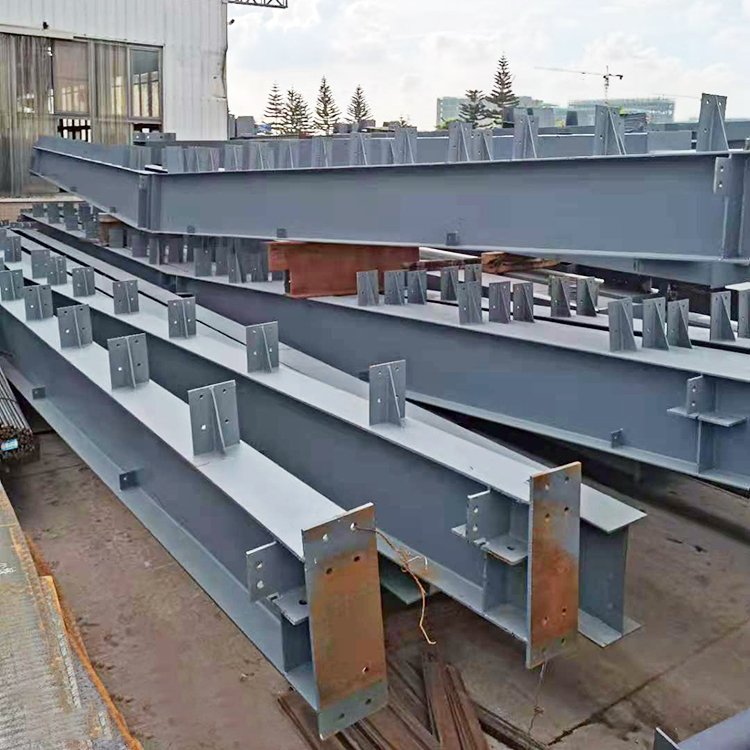
Structural Integrity: How Weld Quality Dictates Load-Bearing Performance in Steel Space Frames
In steel construction, space frames rely on welded tubular nodes to transfer axial, bending, and torsional loads through continuous load paths. A high-quality weld joins chord, flange, and web elements so stress flows without sudden section changes. Conversely, weld defects such as incomplete penetration, undercut, or porosity act as stress risers—initiating cracks under cyclic loading well below the member’s nominal yield strength. For example, a full-penetration butt weld distributes force uniformly, while an undercut toe may concentrate local stress by a factor of two or more under service conditions. This contrast explains why load-bearing performance depends as much on weld geometry and acceptance limits as on base metal grade.
Key weld quality factors affecting structural performance include:
- Weld profile and penetration — incomplete fusion creates notch-like stress concentrations.
- Defect tolerance — porosity and slag inclusions reduce effective load-transfer area.
- Heat input control — excessive heat can degrade heat-affected zone (HAZ) toughness and fatigue life.
- Dimensional fit-up — misalignment introduces eccentric loading at the node.
Standards such as AWS D1.1 and EN ISO 5817 define acceptance criteria for weld profile, penetration, and defect limits. Compliance minimizes variability in joint capacity and helps ensure that a steel space frame performs as designed under service loads. Weld quality that appears visually acceptable but lacks verification may hide subsurface flaws that compromise structural redundancy. Therefore, structural integrity is not only a fabrication outcome—it is a design-critical parameter governed by welding procedure, inspection, and acceptance criteria.
Weld Inspection & Testing: Balancing Visual Checks, NDT, and Real-Time Monitoring in Steel Construction
Radiographic and Ultrasonic Testing for Tubular Joint Verification
Volumetric non-destructive testing (NDT) is essential for tubular space frame joints because visual checks alone cannot detect internal lack of fusion, root cracking, or trapped slag. Radiographic testing (RT) uses X-rays or gamma rays to produce a permanent image of the weld interior, enabling assessment of penetration and porosity against acceptance limits. Ultrasonic testing (UT) sends high-frequency sound waves through the weld and records reflections from discontinuities, making it especially effective for thick, multi-pass tubular connections. UT typically offers faster results, deeper penetration, and no radiation exclusion zone; RT provides a fixed visual record suitable for third-party review. Surface conditions and curved profiles affect signal quality, so calibration blocks and written procedures are required. For critical node welds, both methods are qualified under the applicable structural welding code—many fabricators use UT as the primary volumetric method and reserve RT for spot verification or disputed indications.
Emerging Role of Real-Time Monitoring in Automated GMAW for Steel Space Frames
Automated gas metal arc welding (GMAW) supports high-volume space frame fabrication by maintaining consistent travel speed and wire feed. Yet robotic welding remains vulnerable to process drift from contact-tip wear, wire feed slip, or shielding gas loss. Real-time monitoring systems track arc voltage, current, wire feed speed, and sometimes weld pool images during each pass. If a parameter moves outside the approved envelope, the system flags the joint for immediate check or repair. This shifts quality control from post-weld sampling toward in-process correction—reducing expensive rework on large frames. For critical tubular welds, sensor data creates a continuous record that complements NDT, though monitoring cannot replace radiography or ultrasonics. The most robust strategy uses real-time signals to catch instability early and NDT to confirm final soundness.
Consequences of Poor Welding: Failure Risks, Safety Implications, and Lifecycle Costs in Steel Space Frames
Weld quality determines whether a space frame acts as a unified load path or a set of weakened connections. Poor welding introduces residual stress, distortion, incomplete fusion, and undercut—crack initiation sites that propagate under repeated loads, thermal cycles, or vibration with little visible warning. The safety implications are severe: a sudden joint fracture can trigger progressive collapse, endangering workers and occupants. Lifecycle costs escalate through emergency inspections, rework, downtime, and member replacement—expenses that far exceed the cost of qualified welding and proper fit-up.
Lessons from ISS Truss Segment Repairs and Terrestrial Structural Incidents
The International Space Station experience shows how costly weld-related repairs become after assembly. Truss segment corrections in orbit demanded specialized procedures, contingency materials, and extensive crew time—resources far more constrained than those available in ground-based steel construction. The lesson is clear: defects locked into a welded node during fabrication are extremely difficult to remove after erection.
Forensic investigations of long-span space frame failures reveal recurring weld discontinuities at tubular joints. Incomplete penetration, lack of fusion, and poor fit-up create stress concentrations that accelerate fatigue. In several terrestrial incidents, hairline cracks at welded intersections grew undetected until a critical member fractured. These cases confirm that visual inspection alone can miss subsurface flaws—and that lifetime costs rise sharply when poor weld quality turns a repairable defect into structural failure.
Best Practices for Ensuring Weld Quality in Steel Space Frame Fabrication
Achieving reliable weld quality begins long before the arc is struck. Fabricators increasingly treat fit-up control and joint preparation as the foundation of structural performance. Accurate alignment, calibrated measurement tools, and standardized tolerance limits reduce variation and prevent gaps or misalignment that compromise load transfer. For tubular space frame nodes, even small deviations in root opening or bevel angle can concentrate stress and produce incomplete fusion.
Pre-weld cleaning is equally critical. Steel surfaces must be free of rust, oil, paint, and moisture—contaminants that introduce porosity, hydrogen cracking, or lack of fusion. Qualified welders should then follow approved welding procedure specifications, with voltage, current, and travel speed matched to steel thickness and joint geometry. Consistent parameters help ensure uniform penetration and mechanical properties across hundreds of similar connections.
After welding, verification should combine visual inspection with non-destructive testing (NDT). Ultrasonic or radiographic methods detect subsurface flaws in full-penetration tubular joints, while visual checks identify undercut, overlap, and dimensional errors. Fabrication records should document fit-up measurements, welder qualifications, welding parameters, and NDT results for traceability. Leading fabricators also use controlled workshop environments where stable power supply, proper fixturing, and systematic inspection routines support repeatable outcomes. When applied together, these practices reduce rework, improve fatigue resistance, and protect the long-term integrity of steel space frames.
FAQ
Why is weld quality crucial for steel space frames?
Weld quality ensures the structural integrity of steel space frames by preventing defects like incomplete fusion, porosity, and undercut that can lead to stress concentrations, fatigue, and ultimate failure under loads.
What standards govern weld quality in steel construction?
Standards like AWS D1.1 and EN ISO 5817 define acceptance criteria for weld profiles, penetration, and allowable defect limits, ensuring consistent joint performance under service conditions.
How do non-destructive testing methods detect weld flaws?
Methods like radiographic testing (RT) and ultrasonic testing (UT) identify internal weld flaws such as incomplete fusion or porosity by using X-rays, gamma rays, or high-frequency sound waves.
Can automated welding replace manual inspection?
While automated welding with real-time monitoring improves consistency, it complements rather than replaces manual and non-destructive inspections to confirm quality and detect subsurface flaws.
What are the consequences of poor weld quality?
Poor weld quality can lead to residual stress, cracks, failure risks, reduced lifecycle, and increased costs due to rework, emergency repairs, and structural failures.
Table of Contents
- Structural Integrity: How Weld Quality Dictates Load-Bearing Performance in Steel Space Frames
- Weld Inspection & Testing: Balancing Visual Checks, NDT, and Real-Time Monitoring in Steel Construction
- Consequences of Poor Welding: Failure Risks, Safety Implications, and Lifecycle Costs in Steel Space Frames
- Best Practices for Ensuring Weld Quality in Steel Space Frame Fabrication
- FAQ